
Wood roof trusses are one of the most important structural choices in residential construction. In Texas, they are especially common because they are fast to install, cost-effective, and adaptable to different roof styles, wind conditions, and attic needs.
What a wood truss is
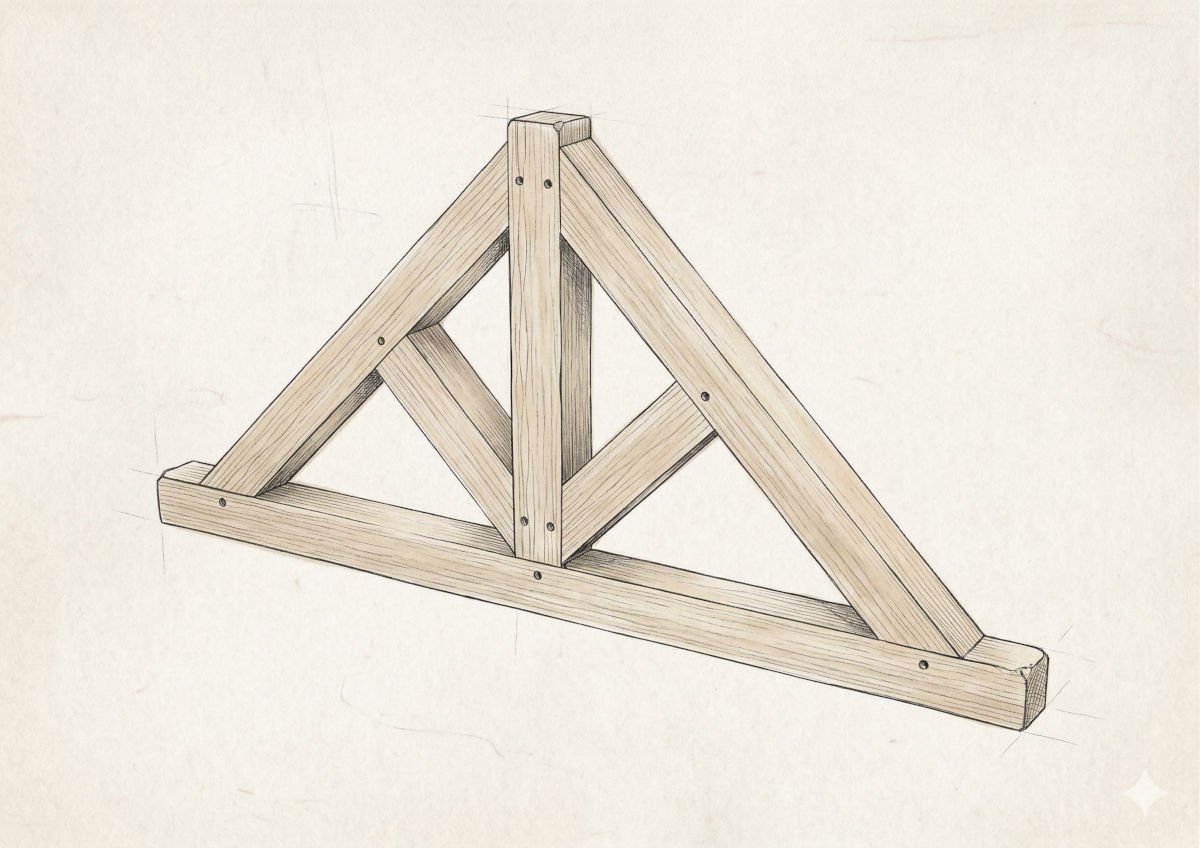
A wood truss is a pre-engineered triangular frame made from lumber and metal connectors. Its job is simple: transfer roof loads safely to the walls while using as little material as possible.
In plain terms, a truss gives you strength, speed, and consistency. For Texas homes, that matters because contractors want framing systems that handle heat, wind, and cost pressure without slowing the job down.
Why truss type matters in Texas
Not every truss makes sense for every house. In Texas, the choice usually depends on:
- Roof span.
- Wind exposure.
- Desired ceiling shape.
- Whether the attic will be used for storage or living space.
- Budget and labor efficiency.
If you pick the wrong truss, you waste money or create design problems later. That is the part people ignore until the framing is already underway.
Common wood truss types
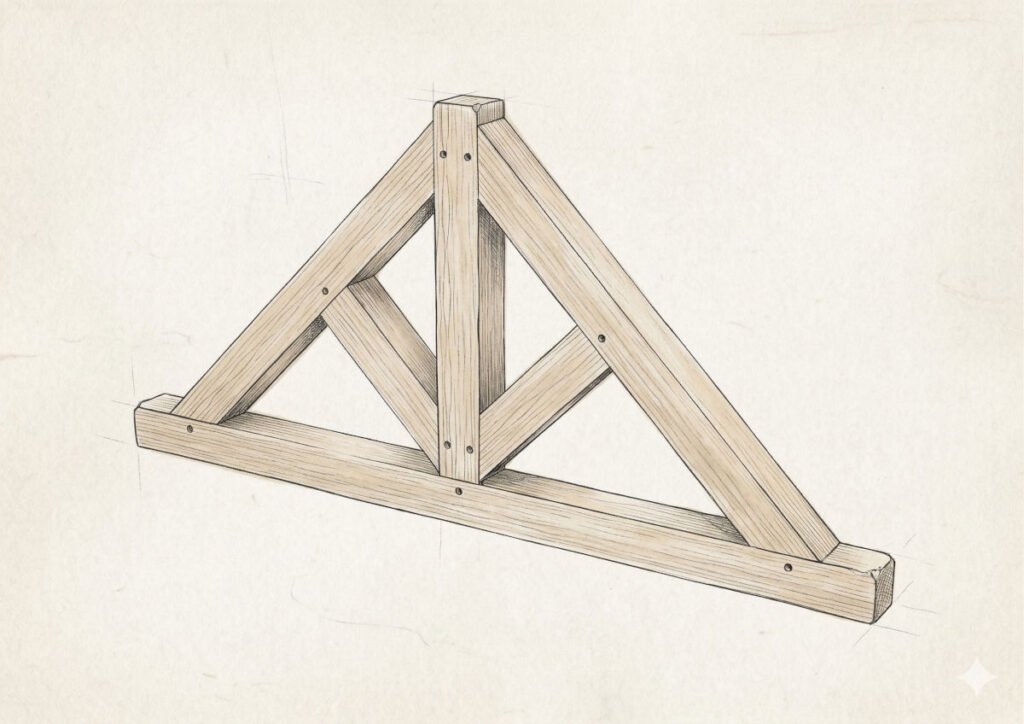
King Post Truss
This is one of the simplest truss designs. It works best for short spans and small structures.
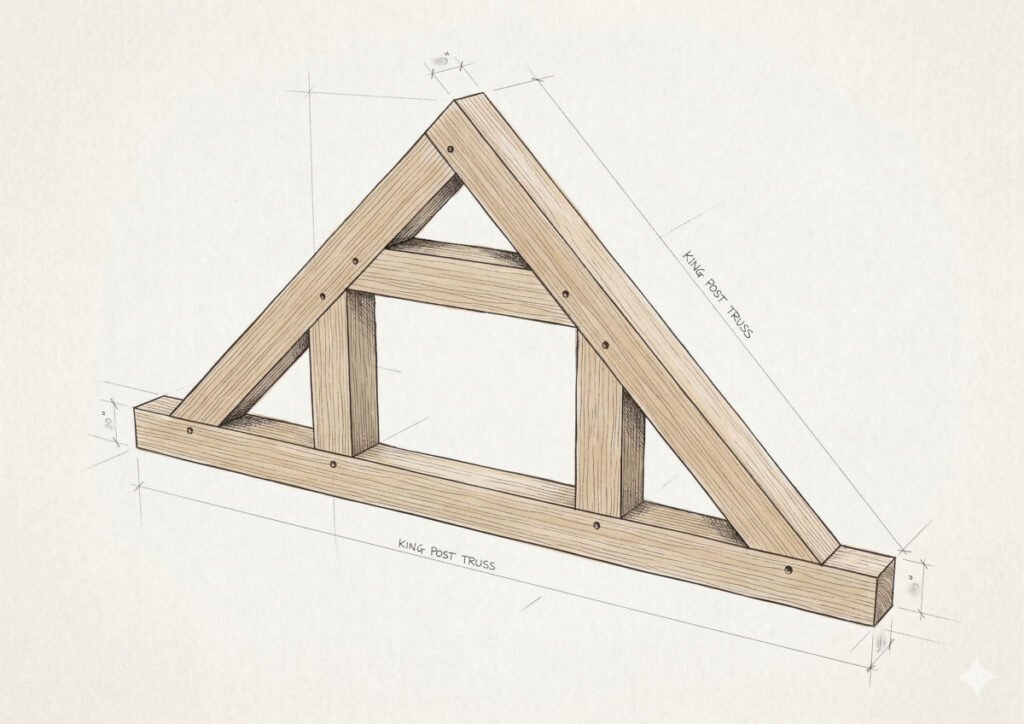
Queen Post Truss
This version uses two vertical posts instead of one, which helps it cover a wider span than a King Post truss.
Fink Truss
This is the most common residential truss in many homes. It is efficient, light, and economical.
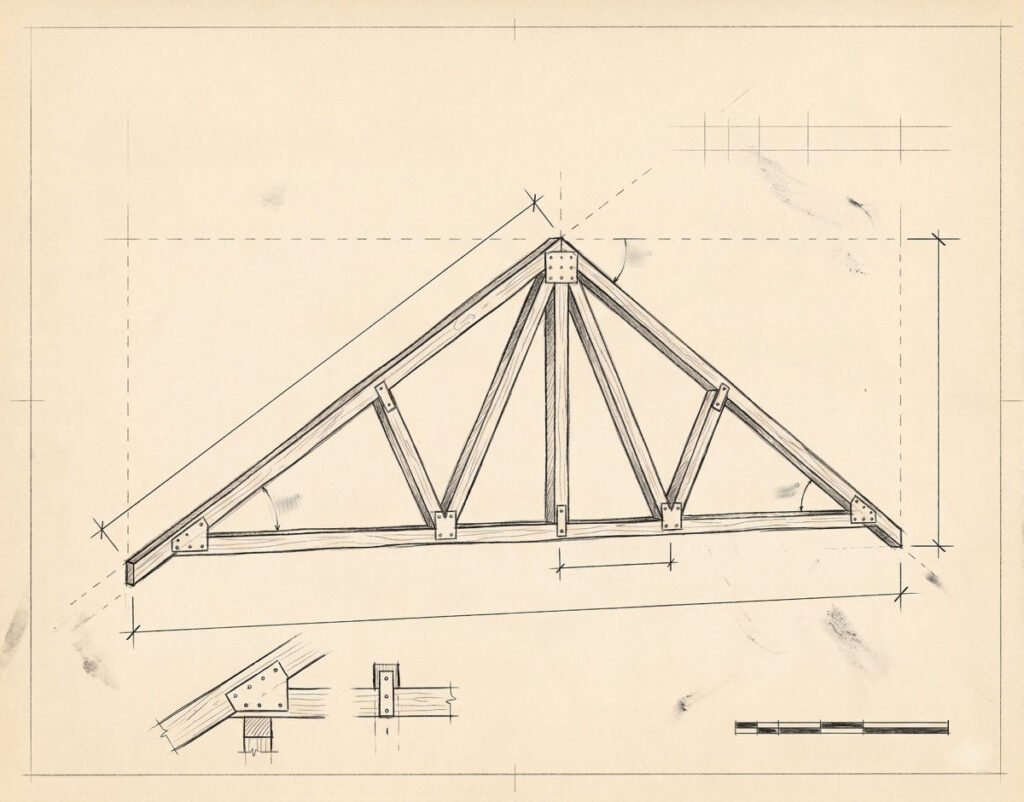
Howe Truss
This truss uses a different internal geometry and is better known in heavier structural applications.
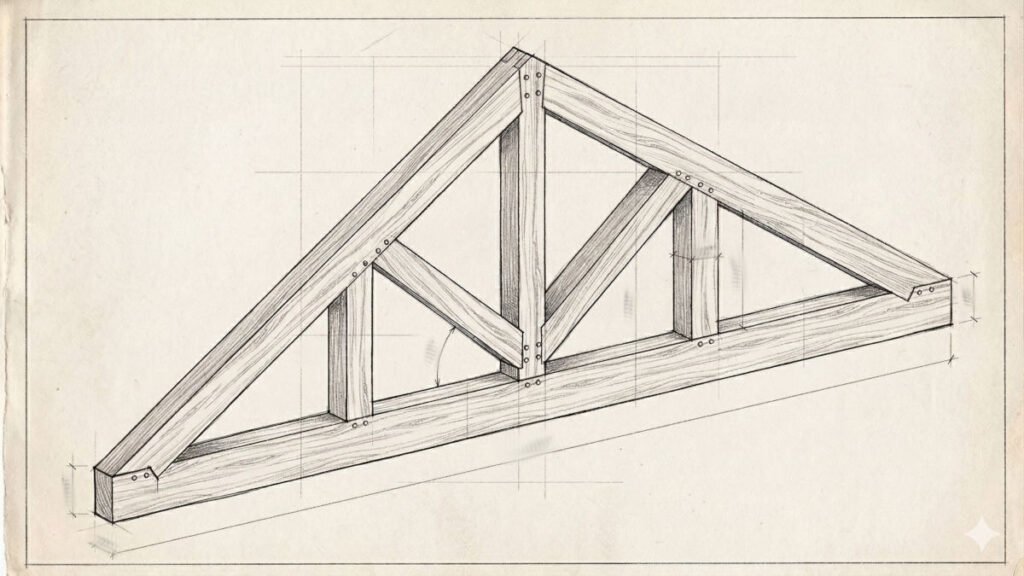
Pratt Truss
Similar in concept to the Howe truss, but with a different force layout. It is less common in standard residential framing.
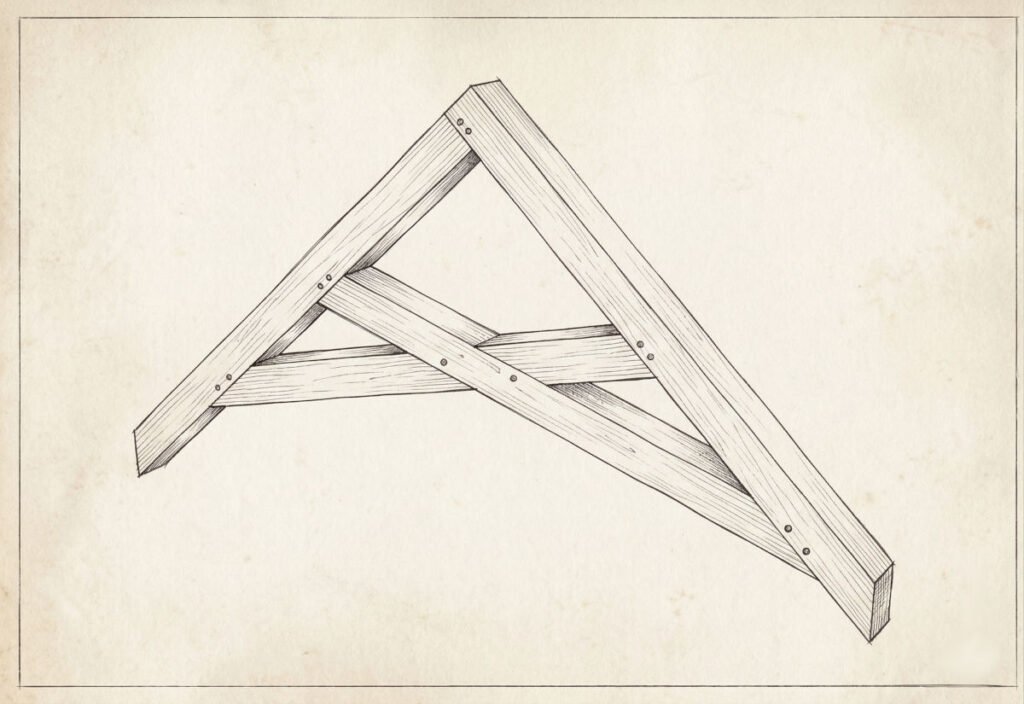
Scissor Truss
This truss creates a sloped interior ceiling and a more open, attractive interior look.
Attic Truss
This truss is designed to create usable attic space, often for storage or an extra room.
Mono-Pitch or Shed Truss
This has a single slope. It is often used in additions, modern designs, and secondary roof sections.
Gable Truss
This truss is used at the ends of a gable roof system. It helps define the roof profile and close the roof structure.
Hip Truss
This truss supports roofs that slope on all sides. It is common in areas where wind resistance matters.
Hammerbeam Truss
This is a more decorative and complex truss, often used for large open spaces or architectural feature areas.
Practical truss table for Texas homes
| Type of truss | Typical use | Main advantage | Main disadvantage | Best fit for Texas homes? |
|---|---|---|---|---|
| King Post | Small spans, sheds, small rooms | Simple and inexpensive | Not suitable for large spans | Limited use only |
| Queen Post | Medium spans | More span than King Post | More parts and more cost | Sometimes, for smaller custom builds |
| Fink | Standard residential roofs | Efficient, economical, fast to build | Limited attic usability | Yes, one of the best choices |
| Howe | Heavier structural needs | Strong under certain load conditions | Heavier and less common in homes | Only when engineering requires it |
| Pratt | Structural applications with specific load paths | Good structural performance | Rare in typical home construction | Not common |
| Scissor | Vaulted or sloped interior ceilings | Better interior look and ceiling height | More expensive and less efficient | Yes, when design matters |
| Attic | Habitable or storage attic | Uses roof space better | Higher cost and more weight | Yes, if attic space is valuable |
| Mono-Pitch / Shed | Additions and modern roof sections | Simple and quick | Less versatile visually | Yes, for additions and lean-to roofs |
| Gable | Gable roof end conditions | Standard and familiar | Not a full roof system by itself | Yes, as part of a full roof design |
| Hip | Four-sided roof systems | Better wind performance | More material and labor | Yes, especially in wind-prone areas |
| Hammerbeam | Large decorative spaces | Dramatic appearance | Complex and costly | Rare in standard housing |
Which trusses usually make the most sense in Texas
For a typical Texas house, the most practical choices are usually:
- Fink trusses, for standard cost-effective framing.
- Hip trusses, when wind resistance and roof stability matter.
- Scissor trusses, when the interior ceiling design matters.
- Attic trusses, when usable attic space is part of the plan.
- Gable trusses, as part of a standard roof system.
That is the honest answer: most builders do not need exotic trusses. They need the right truss for the span, the load, and the budget.
What contractors should check before choosing
Before ordering trusses, a contractor should confirm:
- Roof span.
- Roof pitch.
- Dead load and live load requirements.
- Wind design requirements.
- Whether HVAC, ducts, or attic access need special space.
- Whether the ceiling will be flat, vaulted, or partially open.
If you skip those basics, you are guessing. Guessing in framing is expensive.
How to think about the selection
If the goal is pure efficiency, choose a Fink truss.
If the client wants a more open ceiling, choose a Scissor truss.
If the house needs attic storage or future room potential, choose an Attic truss.
If the area has stronger wind concerns, a Hip truss often makes more sense than forcing a purely decorative design.
Final practical rule
For Texas homes, the best truss is usually the one that balances cost, wind performance, roof geometry, and usable space. In most cases, that means sticking with proven residential systems instead of overcomplicating the roof.
If you want, I can turn this into a more SEO-friendly version with:
- a stronger H1,
- optimized H2s,
- a short intro for contractors,
- and a local Texas angle for Google rankings.