

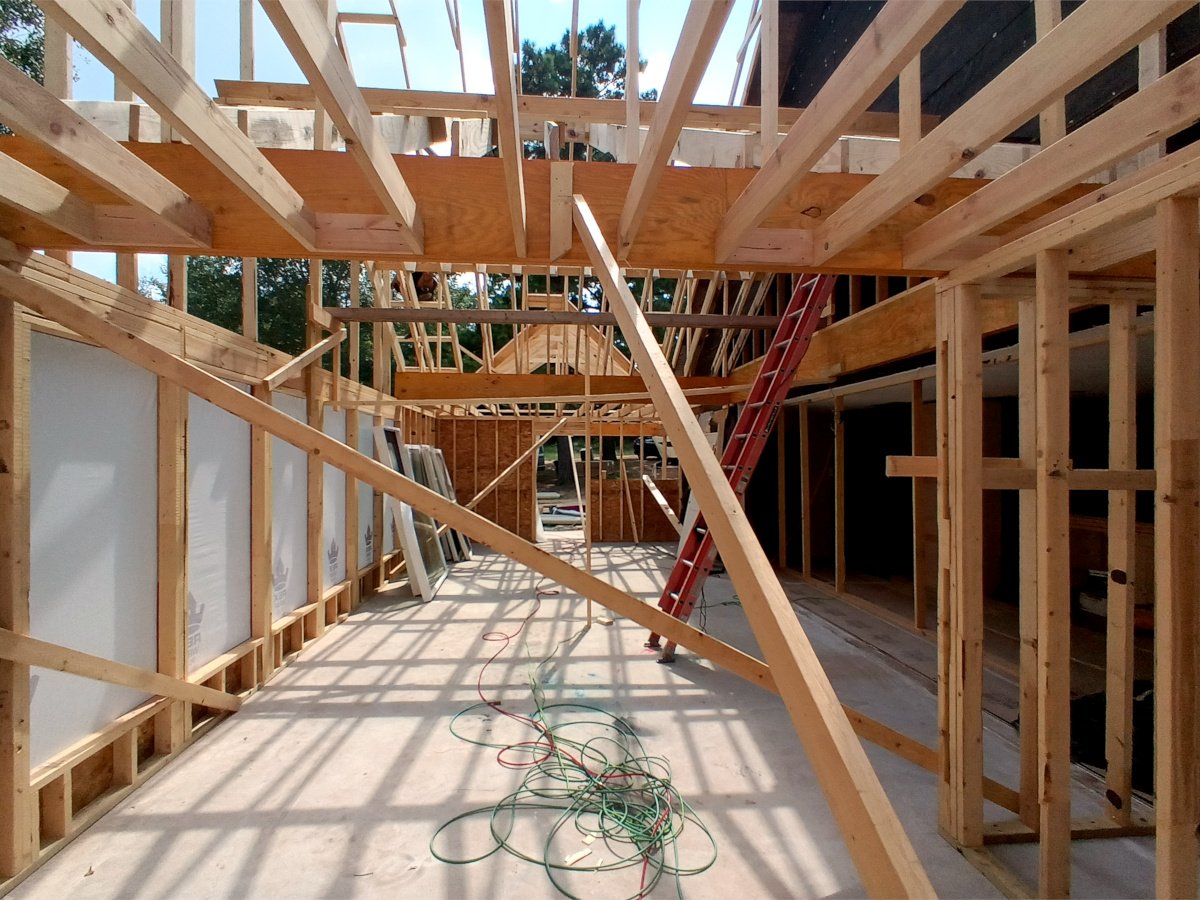
A framing structure in construction is the structural skeleton or framework of a building that provides support, shape, and layout for the entire structure. This framework is usually made up of key components such as studs (vertical members), joists (horizontal floor or ceiling supports), beams (major horizontal supports), plates (top and bottom members of walls), and trusses (roof supports). Wikipedia
Framing transfers loads (weight from the roof, floors, and environmental forces such as wind) safely down to the foundation and creates the basic design of walls, floors, roofs, and openings like doors and windows. Framing can be built from wood, steel, or concrete, with platform framing (using many closely spaced small members) being the most common for modern residential buildings.
In summary, the framing structure acts as the “bones” of a building, ensuring stability, strength, and a base for all finishing materials to be attached.

Common specifications
| Nominal dimensions | Actual dimensions (approx.) | Main use |
|---|---|---|
| 2×4 inches | 1.5×3.5 inches | Walls/posts |
| 2×6 inches | 1.5×5.5 inches | Beams/braces |
| 2×8 inches | 1.5×7.25 inches | Floors and ceilings |
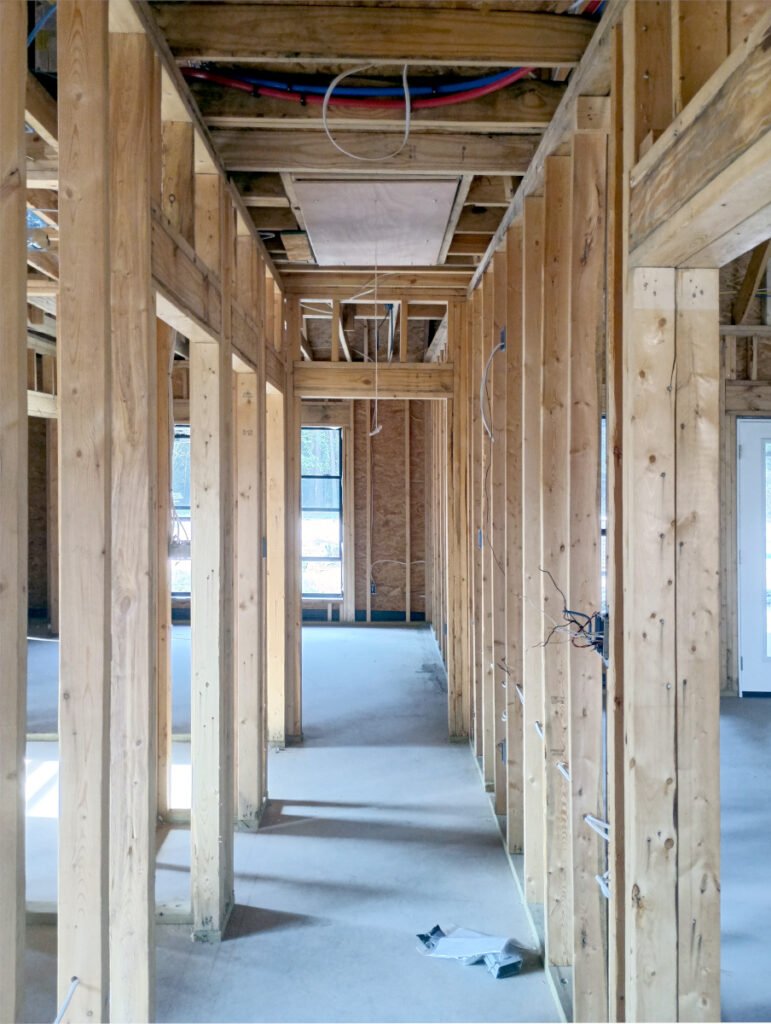
Difference between a king stud and a jack stud
The main difference between a king stud and a jack stud in framing is their purpose and placement around window and door openings:
- The king stud is a full-height vertical framing member that runs from the bottom plate to the top plate of the wall, located on each side of the opening. Its job is to provide structural support to the wall and reinforce the area around the opening, but it does not directly support the header.
- The jack stud sits right next to the king stud, but is shorter—it runs from the bottom plate up to the underside of the header. The jack stud’s main role is to carry the load of the header, transferring weight above the opening down to the floor.
Both are typically made from the same material and have similar dimensions, but they support the structure in different ways. The king stud helps keep the wall strong overall, while the jack stud takes the direct weight of the header and whatever’s above it.

Standard dimensions and materials for king and jack studs in residential construction are as follows:
Standard Dimensions
- Both king studs and jack studs are typically made from the same size lumber as the rest of the wall studs, most often 2×4 inches (actual: 1.5″ x 3.5″) or 2×6 inches (actual: 1.5″ x 5.5″), depending on wall design and local codes.
- King studs run full height from the bottom plate to the top plate of the wall (commonly 8 feet, or 2.44 meters, in standard homes).
- Jack studs are cut to fit under the header and extend from the bottom plate up to the bottom of the header, so their length will depend on the height of the opening and the header size.
- Local codes may require double king or jack studs for larger or load-bearing openings.
Quick Table
| Element | Typical Height | Nominal Size | Typical Material |
|---|---|---|---|
| King stud | Full wall height | 2×4″ or 2×6″ | Pine, spruce, Douglas fir, steel |
| Jack stud | Up to header height | 2×4″ or 2×6″ | Pine, spruce, Douglas fir, steel |
Always check local codes for required number and dimension of studs based on the size of the opening and structural needs.
What are the Cripples?
Cripples are short studs used in wall framing, located either above a door or window header or below a window sill. Unlike regular studs that run full height from the bottom plate to the top plate, cripple studs fill in the spaces interrupted by openings, helping support the loads from above and providing places to attach sheathing or drywall.
Above openings, cripple studs transfer the load from the top plate down to the header; below a window, they transfer the load from the sill to the bottom plate. Cripple studs are usually installed at the same regular intervals as full-length studs, such as every 16 or 24 inches on center.
Their main purpose is to keep the wall strong and stable, especially around door and window openings, ensuring that weight is properly distributed and the framed wall maintains its integrity.
What are the Corner Studs?
Corner studs are vertical framing members used at the intersection where two walls meet, typically at a 90-degree angle. They provide structural support to the corner of the building and create a solid surface for attaching drywall, exterior sheathing, and trim boards.
There are different corner framing methods, but the purpose of corner studs is generally to reinforce the corner while allowing for easy installation of finishes. Traditional corners might use three or more studs to ensure a sturdy connection, while advanced framing techniques use fewer studs arranged to provide room for insulation and reduce material use.
In short, corner studs are the key lumber pieces that form and strengthen wall corners while giving a strong surface for nailing interior and exterior finishes.
What are the T-Wall Studs?
T-wall studs are specialized framing members designed as an alternative to traditional solid 2×6 studs, often used in exterior walls. These studs are made up of two smaller framing members, usually 2x3s, separated by angled wood dowels or other assemblies that create a truss-like structure, resembling the shape of a “T”.
The key advantages of T-wall studs include reducing thermal bridging (which improves insulation and energy efficiency), maintaining or increasing structural strength, and allowing easier installation of utilities like wiring and plumbing through the open spaces within the stud.
T-wall studs can often replace standard studs, jacks, cripple studs, and headers in advanced framing designs, providing better overall thermal performance without compromising strength.
Typical nailing and connection details for both studs
Here are the typical nailing and connection details for king studs and jack studs in wall framing:
King Stud
- Placement: Runs full height from the bottom plate to the top plate, next to each side of the opening.
- Nailing: Attach to the bottom and top plates with end nails (usually 16d nails).
- Additional Detail: Often toenail (angle nail) or screw the king stud into adjacent framing members, especially if doubling up.
Jack Stud
- Placement: Sits directly beside the king stud but only from the bottom plate up to the underside of the header.
- Nailing: Secure the jack stud to the king stud with 8d or 12d nails every 8-10 inches vertically, ensuring solid connection.
- Bottom and Top: Toenail the bottom of the jack stud to the sole plate to lock it in place. Toenail or screw the top to the header pocket.
Fastener Summary
| Connection | Fastener | Typical Spacing |
|---|---|---|
| King to plate (top/bot) | 16d common | 2 per end |
| King to adjacent stud | 16d common | 2 at each connection |
| Jack to king stud | 8d or 12d | Every 8–10 inches |
| Jack to plate/header | Toenail 8d | 2–3 per connection |
Pro tip: Always brace and level the opening before final nailing. For double studs, face nail them loosely together, then finish with nails at an angle to keep them tight and prevent separation.